

In the previous article, we learned about the working principle and operation process of diaphragm filter presses. This article focuses on its applicable working conditions and scientific selection methods.
1. Applicable Working Conditions
Full coverage of multiple industries to meet the treatment requirements of complex materials
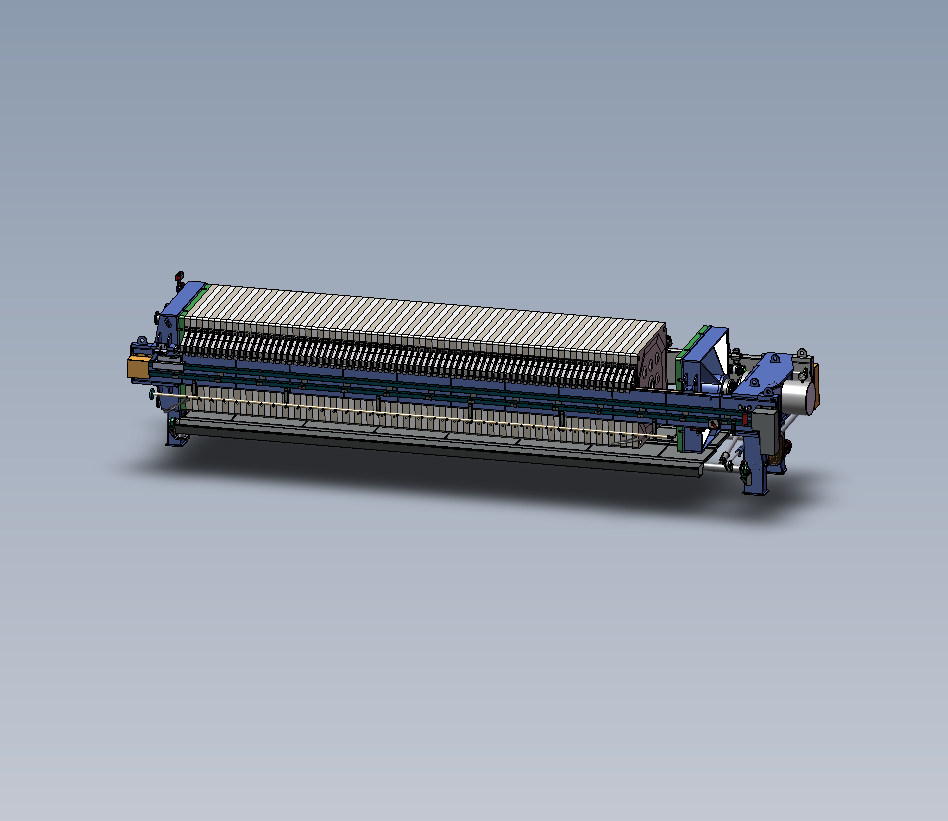
With adjustable pressure, diverse diaphragm materials and excellent dewatering performance, diaphragm filter presses are suitable for material treatment in various industries and with different characteristics. They perform outstandingly especially in scenarios requiring deep dewatering and high-efficiency solid-liquid separation. The core applicable conditions and industry applications are as follows:
Municipal Environmental Protection
Mainly used for dewatering of municipal sludge and river silt. It can reduce sludge moisture content to below 60%, and even below 55% under certain working conditions. It greatly reduces sludge volume and cuts subsequent disposal costs such as landfilling and incineration. It is widely applied in urban sewage treatment plants and river regulation projects, fully complying with the Technical Guidelines for Sludge Treatment and Disposal of Urban Sewage Treatment Plants.
Chemical Industry
Suitable for solid-liquid separation of dyes, pesticides, coatings and other materials, as well as treatment of corrosive media containing acid, alkali and organic solvents. It improves product purity and enables recovery and reuse of filtrate. By adopting corrosion-resistant diaphragm materials such as fluororubber and polypropylene, it adapts to complex corrosive working conditions and meets environmental protection and production demands of fine chemical industry.
Mining and Metallurgy
Applied in dewatering of mine tailings, metal pulp and coal slime. It realizes water resource recycling; dry tailings can be used for brick making or mine backfilling, and dewatered coal slime delivers higher combustion efficiency. It meets large-scale processing demands of major mines and concentrators, with metal recovery rate exceeding 99% in some applications.
New Energy Industry
Specially designed for hazardous waste sludge containing heavy metals such as nickel, cobalt and manganese in the lithium battery industry. Adopting high-pressure diaphragm squeezing technology, it helps enterprises achieve hazardous waste reduction and resource recovery, catering to the environmental treatment needs brought by the capacity expansion of new energy vehicles.
Food and Pharmaceutical Industry
Used for filtration of starch, sucrose and fruit juice, as well as purification of pharmaceutical extracts. Adopting food-grade sanitary diaphragm materials avoids material contamination. It features high filtration accuracy with filtrate turbidity controlled below 5 NTU, fully meeting sanitary standards of food and pharmaceutical industries.
In addition, diaphragm filter presses are applicable to complex materials with high viscosity, high moisture content and poor dewatering performance. The pressure adjustment range is 0.8–1.6 MPa, which can be flexibly adjusted according to material properties. It adapts to both intermittent production and large-scale continuous operation, balancing efficiency and practicality perfectly.
2. Scientific Selection Guidelines
Match equipment on demand to maximize cost performance
The selection of diaphragm filter presses directly determines production efficiency, treatment effect and operating costs. Improper selection may lead to insufficient equipment capacity, unqualified filter cake moisture content, high energy consumption or equipment idleness. Based on industry practical experience, the core selection principle is taking material characteristics as the core, production capacity as the basis, and on-site working conditions as the reference. Four key factors should be focused on, supplemented by scientific calculation for model selection:
1. Clarify Core Material Characteristics
Material property is the primary premise for selection. Key parameters to confirm include concentration, viscosity, particle size, corrosiveness and temperature of the suspension.
For corrosive materials, select diaphragms made of fluororubber, polypropylene and other anti-corrosion materials; for high-temperature materials, adopt high-temperature resistant diaphragms with working temperature within 120℃. For high-viscosity and fine particle materials, choose models with large filtration area and high squeezing pressure to guarantee dewatering effect.
Meanwhile, confirm the initial moisture content (usually 97.5%–99.2%) and target moisture content (usually 60%–65%) to provide basis for filtration area calculation.
2. Match Actual Production Capacity
Calculate the required filtration area according to daily material processing volume, working shifts and filter press cycle, which is the key index for model selection.
Common calculation methods include wet sludge volume method and dry sludge volume method. The wet sludge volume method is recommended for easy data acquisition.
Core formula:
S = 1000 × V1 × (1-a) ÷ (1-b) ÷ 15 ÷ t
S = Filtration area; V1 = Material volume before filtration; a = Initial moisture content; b = Target moisture content; t = Daily working cycles
Example: Daily wet sludge output from domestic sewage treatment is 360m³, initial moisture content 98%, target moisture content 65%, 3 working cycles per day. The calculated filtration area is about 853㎡. In actual selection, choose a model slightly larger than the theoretical value to fully meet processing demands.
3. Adapt to On-Site Working Conditions
Select appropriate equipment model and installation method according to on-site installation space, power supply, air and water supply conditions.
For limited space, choose compact or skid-mounted diaphragm filter presses; for sites without stable air supply, select hydraulically driven squeezing models; for continuous production, adopt fully automatic models equipped with PLC control system to realize unattended operation. Small and medium-sized enterprises can choose single units with filtration area of 4–300㎡ to balance cost and capacity.
4. Prioritize Energy Saving and Later Operation & Maintenance
Pay attention to energy consumption and maintenance cost during selection. Give priority to energy-saving models with optimized filter media and flow channel design, which can reduce energy consumption by 30% compared with traditional equipment.
Meanwhile, select models with low filter cloth wear, easy replacement and low failure rate to extend service life and reduce later maintenance costs. Optional accessories such as automatic filter cloth washing system and cake air-drying module can be configured as required to further enhance equipment practicability.
Conclusion: Empower Enterprises with Professional Technology for Green and Efficient Development
As high-efficiency solid-liquid separation equipment, diaphragm filter presses feature scientific working principle, standardized process and wide adaptability to working conditions, serving as an important support for all industries to achieve environmental compliance, capacity improvement and cost optimization. With the continuous improvement of environmental policies and industrial upgrading, higher requirements have been put forward for the performance and adaptability of diaphragm filter presses.
Our company has been deeply engaged in the solid-liquid separation equipment industry for many years. Relying on advanced R&D technology and rich industry experience, we provide diaphragm filter presses suitable for multiple industries and complex working conditions. We offer one-stop full-service including model selection consultation, customized production, installation and commissioning, as well as after-sales maintenance, helping customers match equipment accurately and realize green and efficient production.
In the future, we will continue to increase R&D investment, promote technological upgrading of diaphragm filter presses, and inject strong impetus into the green transformation and high-quality development of all industries with superior products and professional services.
Post time: May-15-2026