

Project Background
A medium-sized engineering service provider based in Europe, specializing in industrial circulating water and process fluid purification, had long employed single-bag filters combined with disc-type pre-filtration devices to provide liquid treatment solutions for clients in automotive parts manufacturing, metal surface treatment, and chemical intermediate production. As business volume grew, the existing equipment revealed issues such as frequent filter bag changes, rapid differential pressure rise, and high maintenance labor costs. The company sought an upgrade solution that could accommodate high flow rates, low pressure drop, and ease of maintenance.
Solution
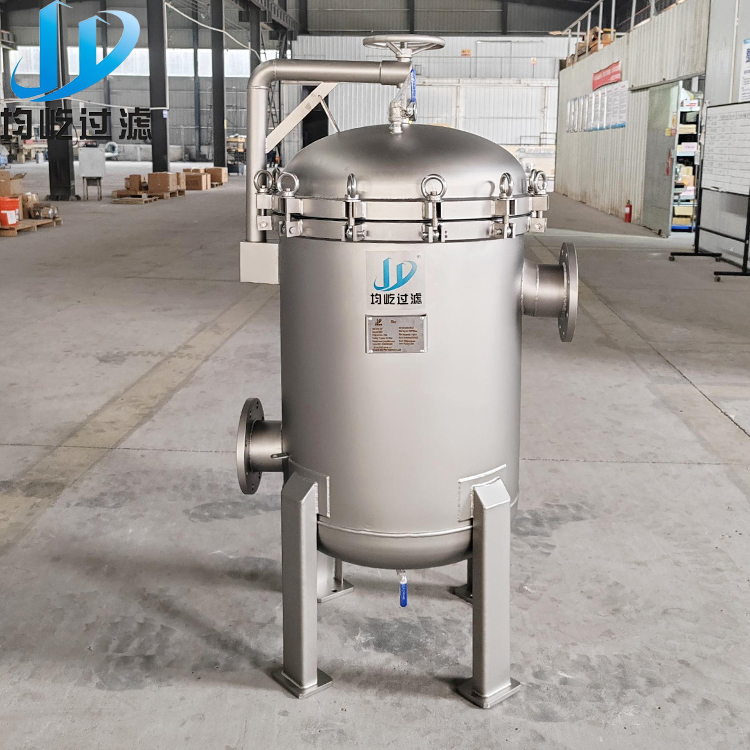
The client’s core concerns included whether the equipment’s pressure rating could withstand instantaneous pressure fluctuations in their piping network, whether filter bag changes could be performed without prolonged system shutdowns, and the corrosion resistance of stainless steel materials in chlorine-containing process water environments. Following technical consultations, the recommended model was the JYMF-6P-304 stainless steel multi-bag filter, based on the following considerations:
-
The 6-bag configuration triples the single-filtration area compared to the original equipment, extending filter bag replacement intervals from once per shift to once every two days under equivalent flow rates;
-
SS304 material combined with sandblasted surface treatment not only withstands the mildly acidic on-site media but also facilitates the removal of surface adhesions, reducing cleaning downtime;
-
The side-in side-out design and DN125 flange connections perfectly match the existing horizontal piping layout, eliminating the need for additional pipeline modifications and saving installation costs;
-
The design pressure of 10 bar and operating pressure of 6 bar provide a safety margin that covers occasional 8-bar transient surges in the system.
Installation and Operation
Upon delivery of the equipment, remote video guidance enabled the client to complete positioning and pipeline connection, with total installation time taking approximately half a working day. During initial commissioning, standard PP filter bags with 300-micron rating were used, treating return cooling water from an automotive painting line with suspended solids primarily consisting of metal chips and minor organic flocs. Data recorded during the first week of operation showed:
-
The initial inlet-outlet differential pressure was 0.15 bar, rising to 0.45 bar after 48 hours of continuous operation, still below the recommended replacement threshold of 0.7 bar;
-
The average flow rate per bag remained stable within the client’s design operating range, with no flow maldistribution or bypass leakage observed, and the steel-ring seal performed effectively;
-
The sandblasted surface showed no localized corrosion in the humid environment, and no paint peeling due to condensate accumulation was observed from temperature differentials between the equipment outer wall and the ambient environment.
Benefit Assessment
After three months of continuous use, the client compiled comparative data:
-
Filter bag consumption costs decreased by approximately 40% – due to extended replacement intervals and the adequate dirt-holding capacity of PP bags at 300-micron rating, reducing the frequency of consumable procurement;
-
Maintenance labor hours were reduced by approximately 55% – daily inspections required only differential pressure checks, with bag changes performed every 48 hours, each operation lasting no more than 20 minutes without the need for special tools;
-
Production interruption time was significantly shortened – the quick-opening structure enabled bag replacement to be completed by a single operator, eliminating the previous need to pause upstream supply for up to one hour;
-
Downstream equipment protection was improved – the frequency of clogging in downstream heat exchangers and nozzles notably decreased, with cleaning maintenance extended from monthly to quarterly, indirectly reducing production loss from downtime.
Conclusion
This case demonstrates that the JYMF-6P-304 stainless steel multi-bag filter, with its robust structural design, rational filter bag configuration, and convenient maintenance characteristics, effectively addresses the typical demands of high-flow, medium-precision filtration in the European industrial fluid handling sector. Its material compatibility and connection versatility also make it highly adaptable across different application scenarios, providing peer companies with a low-risk, high-return filtration upgrade pathway.
Post time: Jun-17-2026