

Case Overview
A small copper ore processing enterprise in South America has long been facing problems with the disposal of tailings slurry. The enterprise generates a relatively small amount of slurry daily, but it contains a small amount of acidic substances. In the past, they used natural sedimentation tanks for treatment, which occupied a large area and had unqualified water quality during the rainy season. The company had also investigated fully automatic filter presses, but the purchase cost was high, the system was complex, and the operation requirements were strict, which were not compatible with their scale and personnel configuration.
Equipment Selection
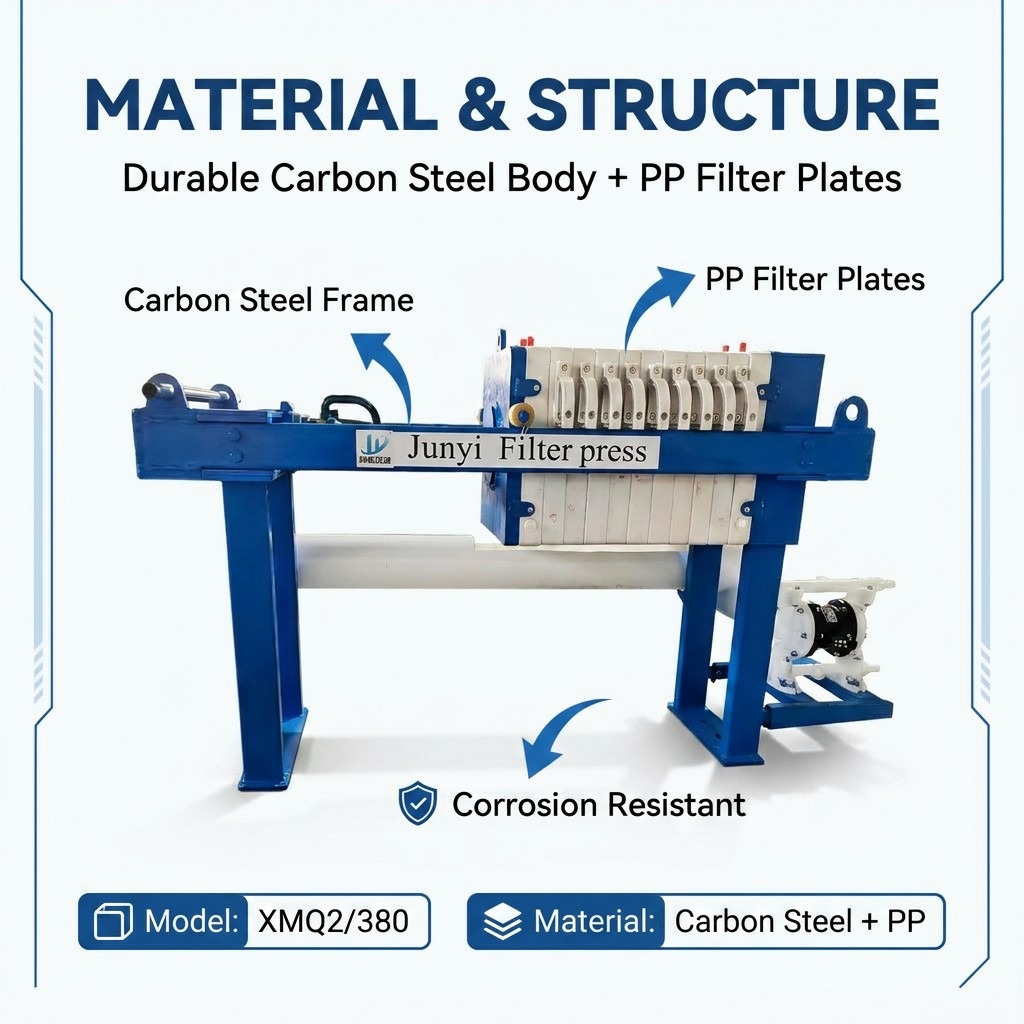
The customer finally chose the XMQ2/380 manual hydraulic press filter press. The configuration includes a carbon steel frame, PP corrosion-resistant filter plates, a 2-square-meter filtration area, QBK-15 pneumatic diaphragm pump and PP pipelines, a clear-flow double outlet design, central pressure of the hydraulic jack, and manual plate pulling for discharging. The equipment can be operated independently upon arrival.
Operational Results
During actual operation, the feed pressure was 0.2 megapascals. As the accumulated solid material in the filter chamber increased, the feed resistance rose until the liquid discharge stopped, indicating the end of the process. The moisture content of the filter cake was less than 25%, with good blockiness, and there was no dripping or leakage during transportation. The filtrate was clear and could be reused in production, with a daily water recovery of approximately 15 tons. Two part-time operators could complete two to three batches of operations per shift, and the equipment operated without any mechanical failures for three months.
Economic Benefits & Customer Feedback
The purchase cost of this equipment is only one fifth of that of the fully automatic model. It does not require professional maintenance personnel, and the overall cost per ton processed has been significantly reduced. Customers have reported that although the manual structure is traditional, it has extremely high reliability in mining environments. The absence of circuits and hydraulic valve groups means that there is almost no risk of sudden shutdown. For small-scale production scenarios, stability and economy are far more important than the level of automation.
Conclusion
This case demonstrates that manual hydraulic press box filter presses have an irreplaceable value in overseas small and medium-sized mining, chemical, environmental protection and other fields. Their low investment, zero maintenance threshold and high reliability features precisely match the customer demands of those with limited budgets and simple conditions but requiring continuous production.
Post time: Jul-08-2026