

I. Project Overview
The client involved in this project is a large-scale agricultural cultivation base that relies primarily on natural surface water and pond water as its core irrigation source. Due to factors such as sunlight exposure, water temperature, and eutrophication, the water consistently contains high levels of planktonic and filamentous algae, along with minor amounts of silt and suspended impurities. The existing irrigation system lacks professional, high-efficiency filtration equipment and relies solely on simple mesh filters for coarse filtration, which are unable to capture fine algae or particulates. As a result, downstream drip irrigation systems frequently suffer from emitter clogging, pipeline sedimentation, and uneven water distribution. This not only increases manual cleaning costs but also leads to insufficient water supply for crops, root oxygen deficiency, and increased risk of root rot and other diseases, severely affecting crop growth and yield.
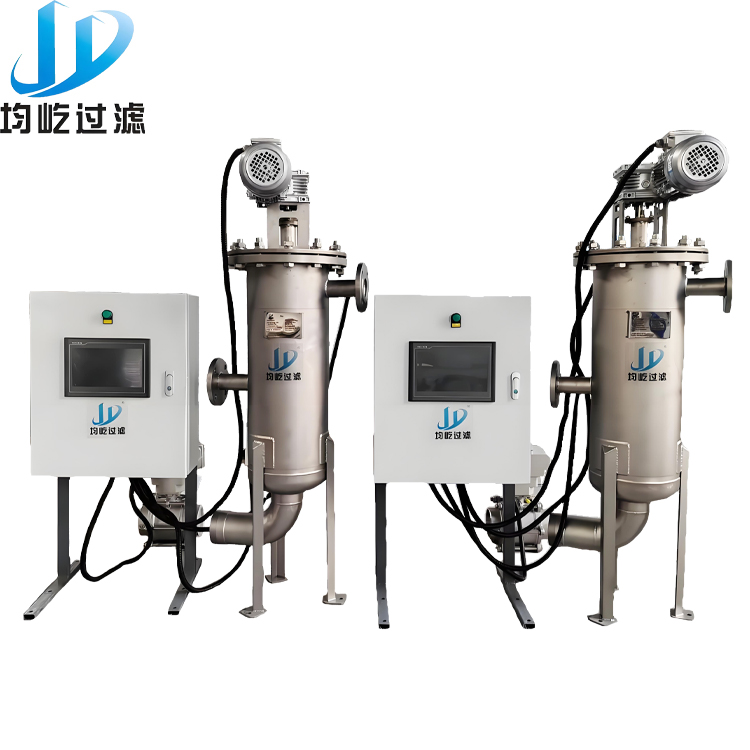
To thoroughly address the issues caused by algal contamination—such as irrigation equipment blockage and substandard water quality—and ensure stable operation of the drip irrigation system, improve water quality, and support higher crop yields and quality, the client specifically procured an automatic self-cleaning filter to treat raw irrigation water, meeting the requirements of continuous, large-scale irrigation operations at the site.
II. On-Site Operating Parameters
Based on the actual pipeline and irrigation system conditions at the site, the key operating parameters are as follows:
• Media to be treated: Natural irrigation water containing algae and suspended solids
• Designed flow rate: 380 m³/h
• Inlet system pressure: 0.6 MPa
• On-site pipe size: DN200
• Water use: Dedicated supply for agricultural drip irrigation systems
• Core treatment objectives: Efficient removal of all types of algae and suspended particles; prevention of clogging in drip lines and emitters; fully automated operation eliminating frequent manual cleaning; ensuring 24/7 stable water supply to the irrigation system
III. Analysis of Existing System Challenges
The original irrigation filtration system at the client’s base was rudimentary and poorly suited to operational needs, resulting in long-standing production challenges that significantly hindered agricultural efficiency:
1. Severe Algae Clogging: Filamentous and planktonic algae easily entangle and adhere to the tiny orifices of drip emitters and inner pipe walls. Over time, accumulated deposits cause restricted water flow, widespread emitter blockages, and uneven distribution of water and nutrients across fields. This leads to inconsistent crop growth, localized water and nutrient deficiencies, and a significant increase in pest and disease incidence.
2. High Manual Maintenance Costs: Traditional simple filter screens have low dirt-holding capacity and poor filtration accuracy. Once algae accumulate, they quickly clog the filters, requiring maintenance personnel to disassemble and manually clean the screens multiple times daily. This labor-intensive process disrupts continuous irrigation schedules and keeps maintenance costs unacceptably high.
3. Significant Equipment Wear: Unfiltered, algae-laden water continuously entering the irrigation network promotes microbial growth due to decaying algae and causes sediment buildup, corroding pipes and accelerating wear on drip irrigation components. This shortens the overall lifespan of the irrigation system and increases repair and replacement costs.
4. Poor Irrigation Water Quality: Harmful substances released during algal metabolism, along with residual suspended particles, degrade the effectiveness of integrated water and fertilizer application. They can also lead to localized soil compaction and microbial imbalance, negatively impacting root development and plant health.
IV. Equipment Selection Solution
Considering the client’s requirements for high flow (380 m³/h), stable pressure (0.6 MPa), DN200 pipeline installation, and targeted algae removal to protect the drip irrigation system, we provided a customized solution featuring a high-capacity, fully automatic self-cleaning filter. The equipment is perfectly matched to the site conditions, requires no modifications to existing pipelines, and offers convenient installation and reliable operation.
Key advantages of the selected configuration:
1. Precise Fit to Site Conditions: The filter’s nominal diameter matches the client’s DN200 pipeline, with a rated flow capacity of up to 380 m³/h, fully meeting the large-scale irrigation demands of the farm. It operates reliably under standard agricultural network pressure (0.6 MPa), maintaining consistent pressure without excessive drops or water shortages, enabling uninterrupted, round-the-clock irrigation operations.
2. Professional Algae Removal Filtration Design: The core filtration component of the equipment features a 316L stainless steel wedge wire screen with uniform pore size, high dirt-holding capacity, and stable filtration accuracy. It efficiently captures floating algae, filamentous algae, fine suspended particles, silt, and other impurities in water, achieving an algae interception rate of over 95%. This prevents algae from entering drip irrigation systems and causing clogging at the source. The 316L stainless steel material offers excellent resistance to acids, alkalis, water corrosion, and biological adhesion, effectively preventing algae-induced corrosion and biofilm formation. It is highly resistant to rust and deformation, significantly extending the filter screen’s service life and making it ideal for long-term outdoor irrigation applications.
3. Fully Automatic Intelligent Operation and Maintenance: The equipment is equipped with an intelligent differential pressure control system that continuously monitors the pressure difference between the inlet and outlet. When the filter screen accumulates algae or debris and the pressure differential reaches a preset threshold, the cleaning cycle automatically activates—requiring no manual intervention or system shutdown—ensuring uninterrupted water supply to the irrigation system. The cleaning process is quick and consumes minimal water, promoting water and energy conservation, aligning well with agricultural water-saving irrigation principles.
4. Durable and Easy to Maintain: Key flow components and filter screens are made of 316L stainless steel, combined with anti-corrosion housing technology, ensuring strong resistance to water corrosion, aging, and scaling. Suitable for outdoor, open-air irrigation environments, the equipment withstands sun exposure, rain, extreme temperatures, and erosion from algae-rich water. Its compact design requires minimal installation space and no complex supporting infrastructure. Maintenance is simple, eliminating frequent replacement of consumables, significantly reducing labor costs and equipment replacement expenses.
V. Project Implementation and Operational Results
After delivery, the equipment was quickly connected and commissioned using the existing DN200 pipeline, without requiring any modifications to the network or disruption to normal irrigation operations. Installation and commissioning were convenient and efficient. Since operation began, the equipment has run stably and reliably, fully resolving the client’s key issues of algal contamination in irrigation water and clogging in drip irrigation systems. All operational indicators have met expectations:
1. Significant Improvement in Irrigation Water Quality: The system effectively removes most algae and suspended impurities, producing clear, clean effluent that fully meets agricultural drip irrigation standards. Harmful substances generated by algal decay are prevented from entering fields via irrigation water, improving soil conditions and promoting healthy root development in crops, thereby significantly reducing the incidence of root rot and other pests and diseases.
2. Complete Resolution of Drip Irrigation Clogging: Water filtered through the system contains no residual algae or large particles, eliminating sediment buildup and blockages downstream in emitters and pipelines. Field irrigation delivers consistent, even water distribution, greatly enhancing the effectiveness of integrated water and fertilizer application, ensuring balanced nutrient and moisture uptake by crops.
3. Dramatic Reduction in Maintenance Costs: The equipment operates with automatic differential pressure self-cleaning, eliminating the need for daily manual disassembly and cleaning of filter screens. This completely avoids the frequent maintenance issues associated with traditional filtration systems, reducing labor requirements by over 90%. The filter screens resist clogging and experience minimal wear, significantly extending equipment lifespan and lowering repair and replacement costs.
4. Notable Increase in Irrigation Efficiency: The equipment supports continuous, stable water supply 24 hours a day, delivering a steady flow rate of up to 380 m³/h. With no downtime for cleaning or interruptions due to pipe blockage, large-scale agricultural irrigation operations proceed efficiently, increasing irrigation efficiency by more than 40% and providing strong support for crop stability and yield enhancement.
5. Outstanding Water and Energy Savings: The self-cleaning process consumes very little water. Compared to traditional methods involving manual water replacement and filter rinsing, this system dramatically reduces water waste, meeting the demands of modern agricultural water conservation and sustainable farming practices.
VI. Customer Summary and Evaluation
This self-cleaning filter project precisely addressed the customer’s core needs for high flow rate, constant pressure, and algae removal to protect drip irrigation systems. The equipment demonstrates excellent adaptability to operating conditions, reliable performance, and superior filtration efficiency. Successfully addressed a series of long-standing issues at the base, including excessive algae in irrigation water, frequent clogging of drip irrigation systems, labor-intensive manual operations, and low irrigation efficiency.
The equipment operates in a fully automatic and intelligent mode, greatly simplifying irrigation operation and maintenance processes, significantly reducing labor and equipment maintenance costs. Meanwhile, stable and high-quality irrigation water effectively improves crop growing conditions, helping to enhance crop quality and yield. Customers highly appreciate the device’s filtration performance, operational stability, adaptability, and after-sales service, considering this self-cleaning filter the optimal solution for large-scale agricultural drip irrigation systems to combat algal contamination and achieve efficient water-saving irrigation, with great potential for widespread application.
Post time: Sep-12-2026