

Project Background
In a seawater desalination plant in the Middle East, the original filtration system used traditional basket filters. Due to the strong corrosiveness of seawater and high impurity content, the filter screens were frequently clogged, and the manual cleaning frequency was as short as once every two days, which seriously affected the operational efficiency of the equipment. The customer hoped to find a filtration device that was resistant to corrosion, could be automatically cleaned, and had low maintenance costs.
Solution
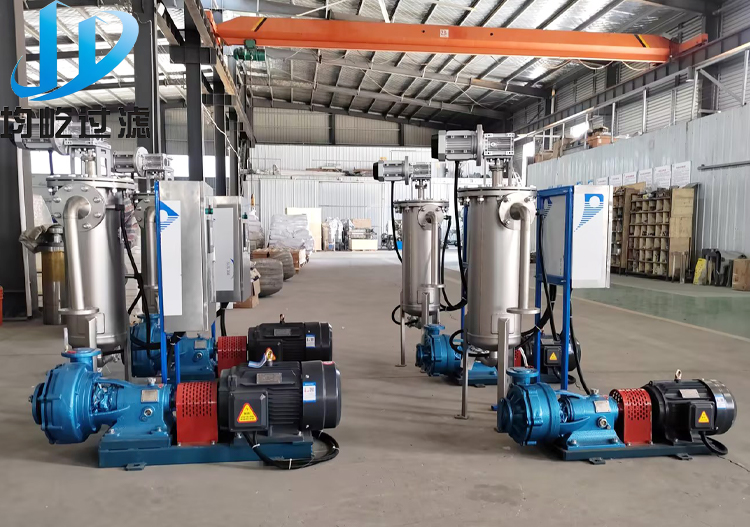
Based on the operating conditions parameters provided by the customer – handling seawater medium, with a flow rate of approximately 30 cubic meters per hour, a design pressure of 10 bars, and a filtration accuracy requirement of 80 micrometers – our company recommended the JYSCF-DN250-DN100 type brush-type self-cleaning filter.
Given the high corrosiveness of seawater, we upgraded all the components in contact with the medium in the filter to 316L stainless steel, while the non-contact parts were made of 304 stainless steel. The seals were selected as EPDM rubber. This ensures long-term resistance to salt fog corrosion. The cleaning structure uses nylon bristles combined with 316L wedge-shaped nets, which not only guarantees the cleaning effect but also avoids damage to the filter screen caused by metal brushes.
In terms of the control system, we have equipped a stainless steel control cabinet with Siemens PLC and Schneider electrical components. It features automatic pressure difference cleaning, timed cleaning, and fault alarm functions, and is linked with the on-site feed pump to achieve fully automatic operation.
Implementation effect
After the equipment was installed and debugged, it has been operating stably for over 8 months. The customer’s feedback is as follows:
Filtering effect meets standards: The 80-micron wedge-shaped filter effectively intercepts fine sand and suspended particles in seawater, reducing the cleaning frequency of the downstream reverse osmosis membrane by approximately 60%.
Automatic operation saves manpower: Once the pressure difference reaches the set value of 0.3 MPa, the cleaning and drainage process will be automatically initiated without the need for manual intervention. The on-site operators will shift from daily inspections to weekly checks.
Excellent corrosion resistance: The 316L material and EPDM seals show no obvious corrosion or leakage in seawater environments.
Low maintenance cost: The nylon bristles combined with the wedge-shaped mesh structure have been operating without the need to replace any spare parts to date.
Customer review
The project manager from the client side stated during the subsequent communication: “This self-cleaning filter has solved our long-standing problem of filter screen blockage. It has a high degree of automation and is highly suitable for the harsh conditions of seawater. At the same time, your factory provided detailed technical drawings during the customization process and timely remote debugging support.”
Case Summary
This desalination project in the Middle East has fully demonstrated the reliability and economic efficiency of our self-cleaning filters in highly corrosive media, continuous operation, and unmanned operation conditions. As the source factory, we can provide customized solutions based on different water quality, flow rate, precision and material requirements. We welcome domestic and foreign customers to negotiate and cooperate.
Post time: Jun-09-2026