

A large electroplating industrial park in Thailand adopted fully automatic stainless steel box-type filter presses, successfully solving the problem of sludge dewatering in corrosive substances, and significantly reducing operating costs.
With the increasingly strict environmental regulations in Southeast Asia, wastewater treatment in the electroplating industry has become a crucial part of enterprises’ green transformation. Recently, a large electroplating industrial park in Thailand has achieved significant improvements in corrosion resistance, dehydration efficiency, and automation level by introducing fully automatic stainless steel box-type filter presses.
Challenge: Equipment predicament in a highly corrosive environment
The original filter presses in this park were made of ordinary carbon steel. They were constantly exposed to high humidity and acidic spray environments. Within just a few months, they suffered severe rusting, failure of the filter plate seals, and material splashing. Frequent equipment maintenance was required, resulting in high maintenance costs; the moisture content of the filter cake was as high as 75%, and the subsequent disposal costs remained extremely high; manual unloading took more than 40 minutes each time, and the efficiency was very low.
Solution: All stainless steel body combined with intelligent and efficient design
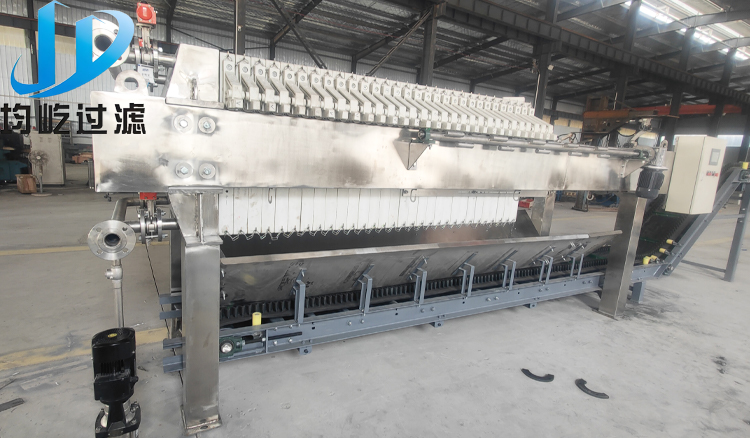
The park finally chose the fully automatic stainless steel box-type filter press. The main frame, cylinder base, pressing plate and other key components are all made of 304 stainless steel. After continuous operation for 9 months, no rust spots were found. The hydraulic system can simultaneously open all filter plates, and in combination with the high-frequency vibration discharge system, the viscous sludge filter cake can automatically fall off without the need for manual scraping. At the same time, the PLC fully automatic control system with an English operation interface realizes unmanned operation throughout the process of pressing, maintaining pressure, pulling plates and discharging.
Significant achievements: Cost reduction, efficiency improvement
After operating for 6 months, the data showed that the moisture content of the filter cake decreased from 75% to 58%, and the single cycle time was shortened from 90 minutes to 55 minutes. The annual maintenance cost decreased by 80%. The filter cloth replacement cycle was extended from 1.5 months to 4.5 months, and labor costs were saved by 60%. No visible corrosion was found on the equipment, the workshop environment was clean, and the safety of workers’ operations was significantly improved.
Customer Review
The general manager of the park stated: “This equipment has received professional support throughout the process, from selection, installation and commissioning to personnel training. We plan to introduce the same model of equipment in another branch factory in the future.”
Post time: May-23-2026